|
|
By Richard Heinberg (World Literature Today, March 2024) |
|
|---|
|
The Chinese philosopher Sun Tzu wrote that, in warfare, it is essential to know both your enemy and yourself. Today, humanity has “enemies,” including climate change and nuclear weapons, that are capable of destroying civilization and whole planetary ecosystems. So far, we are not defeating these enemies—which we ourselves created.
Indeed, even more existential risks are coming into view, including the disappearance of wild nature and the proliferation of toxic chemicals that undermine the reproductive health of humans and other creatures. So many new and serious threats are appearing, and so quickly, that a word has come into currency to describe this unprecedented convergence of risk—
polycrisis.
Our collective inability to reverse the rising tide of risk implies a failure of understanding: we don’t know our enemies; moreover, we evidently don’t know ourselves, because if we did, we wouldn’t continue generating such problems.
[Read the essay]
.
|
|
|---|
|
|
Special Address by UN Secretary-General António Guterres (UN News, June 5, 2024) |
|
|---|
|
Choosing the iconic Family Hall of Ocean Life at the American Museum of Natural History in New York to deliver his special address on climate action, UN Secretary-General António Guterres warned that “we stand at a moment of truth.”
“We need an exit ramp off the highway to climate hell, and the truth is we have control of the wheel,” said the UN Chief. Pulling back from the brink “is still just about possible”, he continued, but only if we fight harder. It all depends on decisions taken by political leaders during this decade and “especially in the next 18 months”.
[Full story]
.
|
|
|---|
|
|
Herbert Girardet (The Ecologist, November 2022) |
|
|---|
|
We need bold solutions to an existential problem: humans have become an immensely powerful planetary force, and after millennia of modest Nature-focused ways of living, humanity has morphed into an urban-industrial giant seeking to unshackle from Nature’s embrace. But our remorseless interventions in the world’s ecosystems are threatening our own future existence. Can we still change course? The ever-growing global environment movement is doing its best to try and stem the damage to forests, soils and oceans — and yet the destruction continues.
Why is this? This essay proposes that we are faced with a profound problem of perception. Our education system has yet to convey a clear understanding of the special properties of life: we are barely addressing the systemic clash between modern humans and Nature, between technosphere and biosphere. The deep-seated ecological problems we face need to be vigorously addressed in the content of our education and communication systems.
[Read the essay]
.
|
|
|---|
|
|
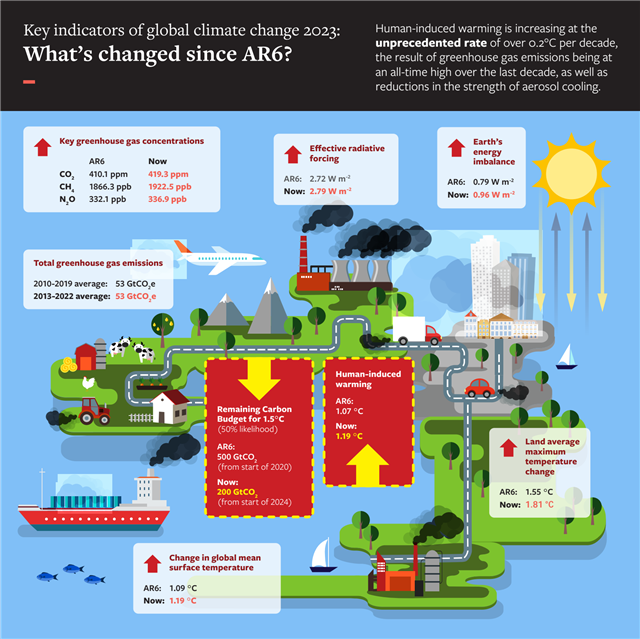
Intergovernmental Panel on Climate Change (IPCC) assessments are the trusted source of scientific evidence for climate negotiations taking place under the United Nations Framework Convention on Climate Change (UNFCCC). Evidence-based decision-making needs to be informed by up-to-date and timely information on key indicators of the state of the climate system and of the human influence on the global climate system. However, successive IPCC reports are published at intervals of 5–10 years, creating potential for an information gap between report cycles.
We follow methods as close as possible to those used in the IPCC Sixth Assessment Report (AR6) Working Group One (WGI) report. We compile monitoring datasets to produce estimates for key climate indicators related to forcing of the climate system: emissions of greenhouse gases and short-lived climate forcers, greenhouse gas concentrations, radiative forcing, the Earth's energy imbalance, surface temperature changes, warming attributed to human activities, the remaining carbon budget, and estimates of global temperature extremes. The purpose of this effort, grounded in an open-data, open-science approach, is to make annually updated reliable global climate indicators available in the public domain. As they are traceable to IPCC report methods, they can be trusted by all parties involved in UNFCCC negotiations and help convey wider understanding of the latest knowledge of the climate system and its direction of travel.
The indicators show that, for the 2014–2023 decade average, observed warming was 1.19 [1.06 to 1.30] °C, of which 1.19 [1.0 to 1.4] °C was human-induced. For the single-year average, human-induced warming reached 1.31 [1.1 to 1.7] °C in 2023 relative to 1850–1900. The best estimate is below the 2023-observed warming record of 1.43 [1.32 to 1.53] °C, indicating a substantial contribution of internal variability in the 2023 record. Human-induced warming has been increasing at a rate that is unprecedented in the instrumental record, reaching 0.26 [0.2–0.4] °C per decade over 2014–2023. This high rate of warming is caused by a combination of net greenhouse gas emissions being at a persistent high of 53±5.4 Gt CO2e yr−1 over the last decade, as well as reductions in the strength of aerosol cooling. Despite this, there is evidence that the rate of increase in CO2 emissions over the last decade has slowed compared to the 2000s, and depending on societal choices, a continued series of these annual updates over the critical 2020s decade could track a change of direction for some of the indicators presented here.
.
.
|
|
|---|
|
|
|
Keywords and meta-markers: human-induced warming; key climate indicators; Earth energy imbalance; science–policy gaps; open-science approach; failures of awareness; remaining carbon budget; critical decade |
|
Source:
Forster, P. M., et al. (2024).
Indicators of Global Climate Change 2023: Annual Update of Key Indicators of the State of the Climate System and Human Influence. Earth Systems Science Data, 16, 2625–2658.
https://doi.org/10.5194/essd-16-2625-2024
.
.
. |
|
|---|
|
|
|
|---|
|
| |
An apocalyptic imaginary appears so frequently in debates on climate change and the Anthropocene that it might be considered the dominant historical narrative of our time. However, when dealing with apocalypticism, biblical references are not always appropriate.
In this article, I argue that we are dealing with two different concepts of apocalypticism, and that the new apocalyptic history is not a negative version of the religious apocalypse. Second, I also argue that the new apocalyptic history nevertheless seems to revolve around the idea of the promise as a specific historical way of binding the past, present and future into a coherent history that, ironically, seems to open up a dialogue with the history of theology.
_
|
|
|---|
|
|
|
Keywords and meta-markers: end of the world; apocalypticism; Anthropocene; eco-catastrophism; promise; apocalyptic imaginary; futures |
|
Source:
Chorell, T.G. (2024).
Two Concepts of Apocalypse and Apocalyptic History Today. Rethinking History, 1–19.
https://doi.org/10.1080/13642529.2024.2352315
.
.
.
.
.
.
.
. |
|
|---|
|
|
|
|---|
|
| |
Previously, anthropogenic ecological overshoot has been identified as a fundamental cause of the myriad symptoms we see around the globe today from biodiversity loss and ocean acidification to the disturbing rise in novel entities and climate change. In the present paper, we have examined this more deeply, and explore the behavioural drivers of overshoot, providing evidence that overshoot is itself a symptom of a deeper, more subversive modern crisis of human behaviour. We work to name and frame this crisis as ‘the Human Behavioural Crisis’ and propose the crisis be recognised globally as a critical intervention point for tackling ecological overshoot. We demonstrate how current interventions are largely physical, resource intensive, slow-moving and focused on addressing the symptoms of ecological overshoot (such as climate change) rather than the distal cause (maladaptive behaviours).
We argue that even in the best-case scenarios, symptom-level interventions are unlikely to avoid catastrophe or achieve more than ephemeral progress. We explore three drivers of the behavioural crisis in depth: economic growth; marketing; and pronatalism. These three drivers directly impact the three ‘levers’ of overshoot: consumption, waste and population. We demonstrate how the maladaptive behaviours of overshoot stemming from these three drivers have been catalysed and perpetuated by the intentional exploitation of previously adaptive human impulses. In the final sections of this paper, we propose an interdisciplinary emergency response to the behavioural crisis by, amongst other things, the shifting of social norms relating to reproduction, consumption and waste. We seek to highlight a critical disconnect that is an ongoing societal gulf in communication between those that know such as scientists working within limits to growth, and those members of the citizenry, largely influenced by social scientists and industry, that must act.
.
_
|
|
|---|
|
|
|
Keywords and meta-markers: social norms; limits to growth; the metacrisis of ecological overshoot; maladaptive behaviors; drivers of overshoot behavior; societal breakdown; interdisciplinary emergency response |
|
Source:
Merz J.J., Barnard P., Rees W.E., et al. (2023).
World Scientists’ Warning: The Behavioural Crisis Driving Ecological Overshoot. Science Progress,106(3).
https://doi.org/10.1177/00368504231201372
.
.
.
.
.
.
.
.
.
.
.
.
.
.
.
.
.
.
.
.
.
.
.
.
.
.
. |
|
|---|
|
|
|
|---|
|
| |
The central question in this paper is whether a market economy can theoretically and empirically deal with sustainability. A system analysis of the current neoclassical theory shows that the system components (goal function, interaction mechanisms, actors and outcomes) are predominantly defined in terms of economic growth and facilitated by market exchange. This fosters (over)production and consumption of private goods, crowding out public goods and preservation of the commons. The one size fits all ‘economic mechanism design’ cannot deliver social outcomes regarding sustainability.
The explicit recognition that an economy has different domains (ecological, social, economic) broadens the options for incorporating sustainability within the economic system. This richer framework allows us to analyse the economic problem at hand: an efficient economic system in an inclusive society within biophysical boundaries. We show that the alternative for market economics does not only have to be government intervention but can also include private forms of collective decision-making.
_
|
|
|---|
|
|
|
Keywords and meta-markers: sustainability transformation challenges; biophysical boundaries; neoclassical economics’ failures; faulty assumptions; ontological reductionism of economic theory; political economy of climate crisis; regulatory captures; intergenerational wellbeing; commons preservation; framework for sustainability economics |
|
Source:
Schoenmaker, D., Stegeman, H. (2023).
Can the Market Economy Deal with Sustainability? De Economist 171, 25–49.
https://doi.org/10.1007/s10645-022-09416-6
.
.
.
. |
|
|---|
|
|
|
|---|
|
|
NB:
Metascope is not optimized for small-resolution screens and mobile devices, and it may not render equally well in all email clients and applications. For the best reading experience, we recommend viewing this publication in the web browser of your desktop computer, notebook, or tablet. Gmail and some other email clients may clip the displayed part of the publication. To enjoy the full issue, click on the “view entire message” link at the bottom of this message or select the “view this email in your browser” option at the top.
This curated collection contains 46 unique entries (textual, graphic and video materials), generally referenced by titles in bold font. It will be easier for you to access the full content of the issue by knowing this, even if your email program ends up clipping the displayed part of the publication. Note that we usually place event announcements and links for open-access book downloads toward the end of the publication. This is demo issue #5. To access previous issues, follow these links:
issue #1 | issue #2 | issue #3 | issue #4
|
|
|---|
|
| |
The Resilient Cities Network, formerly known as the 100 Resilient Cities, supports the development of local resilience policies in partaking cities from around the globe. Various policies in the network are an example of an upcoming trend where experiments are increasingly conducted in the urban space to shape governance. Experiments in this context are purposeful interventions to increase resilience through learning and the temporal and spatial diffusion of results. Experimentation and resilience are highlighted in the literature on political ecology for policies presumably leading to urban transformations. Both approaches face strikingly similar critiques, namely that related rationales and narratives frequently maintain the political and economic status quo and reproduce socially unjust urban realities. However, they are rarely examined together and empirical findings are missing when it comes to comparative research; particularly between the Global South and North.
Against this background, this paper asks: Which role plays social justice in rationales and narratives of resilience experiments in Global South and Global North cities? I examine experimental policy actions in Global South and North cities of the Resilient Cities Network (N = 112) qualitatively through an analytic lens that links a social justice understanding to the setting, agency, and design of resilience experiments. Based on this analysis, I compare the results to explore emerging patterns of the role given to social justice in urban resilience experimentation across cities of the Global South and North. The findings show that narratives in Global North cities revolve stronger around recognising social justice, but Global South cities put more emphasis on marginalised groups and learning mechanisms that potentially foster social justice through output legitimacy.
.
.
|
|
|---|
|
|
|
Keywords and meta-markers: political ecology; local government; climate policy; transnational municipal network; social justice; medium-sized comparative study; resilience experimentation |
|
Source:
Kochskämper, E. (2024).
Just Transformations Through Resilience Experiments? Comparing Policy Rationales and Narratives of the Global South and North in the Resilient Cities Network. Zeitschrift für Vergleichende Politikwissenschaft.
https://doi.org/10.1007/s12286-024-00599-7
.
.
.
.
.
.
.
.
.
.
.
.
.
.
.
.
.
.
|
|
|---|
|
|
|
|---|
|
| |
The necessity and consequences of the exponential growth in tourism activity experienced throughout the world over the past half-century have been increasingly questioned by an expanding body of activists and critical researchers. One of the emerging responses within this debate concerns calls for reversing the trend in pursuit of touristic ‘degrowth’.
This discussion has been inspired by a longstanding body of research problematizing the imperative and consequences of economic growth more generally, initiated by natural and social scientists. This article offers a state-of-the-art overview of the application of degrowth perspectives to discussions of (sustainable) tourism development and outlines a future agenda for research and praxis continuing this important line of inquiry.
._
|
|
|---|
|
|
|
Keywords and meta-markers: degrowth; capitalism; postgrowth; ecosocialism; metabolic rift; postcapitalism; sustainability praxis; ecosocial innovation |
|
Source:
Murray, I., et al. (2023).
Tourism and degrowth. Tourism Geographies, 1–11.
https://doi.org/10.1080/14616688.2023.2293956
.
.
.
.
.
.
.
.
|
|
|---|
|
|
|
|---|
|
| |
The narrative of US climate impact and action often focuses on the nation’s cities and crowded coasts. However, in the vast expanse of rural and small-town America, there is a story that has been largely untold, one of significant emissions reduction potential shadowed by systematic underinvestment.
A first-ever analysis of emissions sources in our nation’s countryside found a stark reality: At least 36% of US emissions are produced in rural America, amounting to 2,263 million metric tons of carbon dioxide equivalent (MMT CO2e) annually. The analysis highlights that U.S. climate action requires rural strategies and investments.
.
_
|
|
|---|
|
|
|
Keywords and meta-markers: rural emissions; clean energy development; failures of awareness; misinformation; rural-led advocacy; economic resilience; environmental impacts of conventional agriculture; sustainable farming |
|
Source:
Rural Climate Partnership. (May 2024).
The Overlooked Climate Impact of Rural America (Report).
https://ruralclimate.org/rural-emissions-report-2024/
.
.
.
.
|
|
|---|
|
|
|
|---|
|
| |
Biofuels represent a complex issue in the sustainability discourse as they require the simultaneous consideration of different dimensions and scales of analysis. This situation explains the co-existence of contrasting ‘scientific evidence’ about their performance.
This paper presents a novel conceptual framework that integrates four key aspects of the performance of biofuels: (1) the social factors determining the desirability of biofuel use on the demand side – why do we want to produce biofuels?; (2) the internal technical and economic constraints affecting the viability of their mode of production on the supply side – how can we produce biofuels?; (3) the external biophysical constraints limiting the feasibility of their production – what are the material limits imposed by the availability of natural resources?; (4) the level of openness of the biofuel system referring to the imports used to overcome local limits – the level of externalization of the requirement of natural resources and technical production factors reducing energy security.
The proposed framework generates a biophysical characterization of the supply function of a biofuel system (which inputs are needed to generate the supply) contextualized against a biophysical characterization of the societal demand (what inputs the society is ready to invest in the energy system in order to obtain the supply).
.
_
|
|
|---|
|
|
|
Keywords and meta-markers: biofuels; relational analysis; conceptual framework; taxonomy; grammar; energy system; know-why of climate solutions |
|
Source:
Ripa, M., Cadillo-Benalcazar, J.J., Giampietro, M. (2021).
Cutting through the biofuel confusion: A conceptual framework to check the feasibility, viability and desirability of biofuels. Energy Strategy Reviews, 35(5), 100642.
https://doi.org/10.1016/j.esr.2021.100642.
.
..
.
.
.
.
.
.
.
.
.
.
.
.
.
.
.
.
.
|
|
|---|
|
|
|
|---|
|
|
How to Revolutionize an Industry |
|
|---|
|
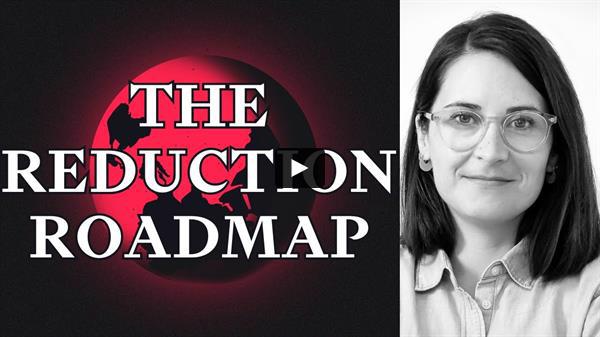
Amazingly, in Denmark, an industry is lobbying its government for much tighter regulations to absolutely reduce emissions in order to meet the Paris Agreement. Stakeholders across the entire Danish building industry have agreed to an ambitious reduction roadmap after a team of architects undertook an independent review of government policies. They found that global building emissions must be reduced by 96% to limit global warming, and are currently lobbying for an emissions cap of carbon dioxide kilograms per square meter.
In this episode of the
Planet: Critical podcast, its host, Rachel Donald, interviews Dani Hill-Hansen, sustainable design engineer, architect at EFFEKT, and co-author of the Reduction Roadmap. Dani explains the findings of their research, the ambitious targets of the roadmap, how they got 540 stakeholders across the industry to sign on, and the methodology of “brand activism” they’ve developed alongside this project to kickstart other industries across the globe to initiate necessary climate action.
|
|
|---|
|
|
The
Entangled World podcast explores our interrelated, existential social, economic, ecological, and technological challenges, their underlying drivers, and how a more beautiful world might emerge. Its host, Najia Shaukat Lupson, interviews artists and academics, philosophers and philanthropists, spiritual seekers and scientists, technologists and thinkers.
In this episode, her guest is Four Arrows also known as Wahinkpe Topa or Dr. Don Trent Jacobs. Four Arrows is internationally respected for his expertise in Indigeneity and applications for living life in balance. He is a prolific author of many books and writings about the vital necessity of restoring our pre-colonial worldview. The most recent book that he co-wrote with Darcia Narvaez, is
Restoring the Kinship Worldview: 28 Precepts for Rebalancing Life on Mother Earth. It is a thought-provoking exploration into how we’re living and what we can learn from Indigenous and ancient cultures that have lived in harmony with all of life for centuries before colonization and industrialization became the norm. The book was selected as one of “the most thought-provoking, inspiring, and practical science books of 2022” by UC Berkeley’s Science Center for the Greater Good.
In September of 2023, Four Arrows presented before the 9th annual Sustainability Summit at the 76th General Assembly of the United Nations in New York. He is truly a unique human being, he is a former world-class equestrian, a horse whisperer, a world champion old-time piano player, holds two PhDs and lives next to and surfs on the Costalegre waves of Jalisco Mexico.
In this conversation, Four Arrows delves into the Indigenous worldview, non-duality, and origin stories. He discusses anthropocentrism—the idea that humans sit atop the pyramid of life and that everything else on Earth is inferior and disposable. Recognizing that this human-centric perspective lies at the root of our crises, the conversation explores unconventional ways to shift our worldviews and culture.
|
|
|---|
|
| |
Plurality transcends mere tolerance or liberalism; it actively recognizes the necessity of diversity. The idea of cognitive justice underscores that knowledge cannot be confined to science alone and that our community requires a dialogue of knowledges, not just an interdisciplinary encounter between the sciences. It acknowledges that science has become a hegemonic form of knowledge, ‘museumizing’ entire communities. In its relentless pursuit of innovation, science fails to recognize that rendering knowledge obsolete constitutes a form of violence.
Contemporary social movements have identified a genocidal emphasis in the concepts of ‘progress’ and ‘development’ concerning indigenous ways of knowing. These concepts promote a dichotomy between ‘backward’ and ‘advanced’ societies, allowing the latter to erase or eliminate indigenous and traditional knowledge under the guise of progress.
By Shiv Vishanathan (ACU Review, 4/26/21) |
|
|---|
|
| |
Among all government institutions worldwide, the US and UK militaries bear some of the greatest responsibility for climate crisis. Despite this, emissions from military sources are not addressed in international climate agreements: as a result of US lobbying, overseas military emissions were made exempt from the 1997 Kyoto Protocol and military emissions reporting remained optional in the 2015 Paris Climate Agreement. Even if using opaque official data, the UK and US militaries have jointly emitted at least 430 million tonnes of CO2 equivalent since the year of the Paris Climate Agreement — more than the total greenhouse gas emissions produced in the UK in 2022.
While several other militaries are also leading institutional emitters, this report focuses on the joint climate impact of the US and UK militaries for three reasons: first, their historic role in the development of the global fossil fuel economy; second, their current consumption of fossil fuels, associated greenhouse gas emissions and the environmental damage produced by their military infrastructure; third, the US and UK governments’ allocation of public investment towards carbon-intensive industrial sectors to supply their militaries when they could better prioritize green industrial policy.
Source: 2023 Report by Common Wealth and The Climate and Community Project |
|
|---|
|
Neoliberalism isn’t just a set of economic precepts—it’s also an architecture of laws passed to reinforce those precepts. Those laws must be changed.
Neoliberalism, an ideology and form of governance that came to power in the 1970s and ’80s, is commonly associated with the thought of a few influential economists—people like Friedrich Hayek and Milton Friedman. But how did the ideas of a small group of academics actually come to exert power in the world?
Neoliberal ideas had impact because they changed not only minds, but also laws. That might seem like a simple process: ideas shape people, and then people lobby for legislation. This is the Schoolhouse Rock story of how ideas get into law, but a great deal of legal change occurs in ways much more obscured from public view.
Judges interpret statutes and create constitutional rules that shape laws or invalidate them. Agencies reshape the law by making rules or giving official guidance to regulated entities. What lawyers believe the law requires has influence too, even where matters never get to court, because so many people today rely upon lawyers to tell them what they may do or say. Law schools train a great many elected officials and policy elites in the United States, making legal education a profoundly important place of political acculturation.
By Amy Kapczynski (Democracy; Summer 2024, No. 73) |
|
|---|
|
Is the US a Democracy?
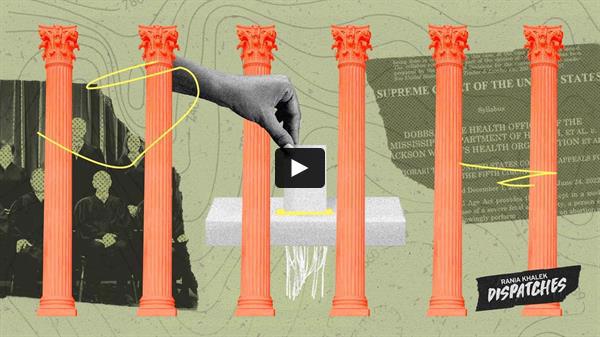
How is it that judges, arbitrarily chosen by presidents who didn’t even win the popular vote, are appointed for life and can overturn our most cherished rights? What’s with the veneration of the US constitution, which was written by slave owners? Is America really a democracy?
To discuss this and more, host Rania Khalek was joined by Aziz Rana, a professor of law and government at Boston College Law School and author of the books
The Two Faces of American Freedom (2010),
Reclaiming Freedom (2024), and
The Constitutional Bind: How Americans Came to Idolize a Document That Fails Them (2024).
Professor Rana’s research and teaching center on American constitutional law and political development. In particular, his work focuses on how shifting notions of race, citizenship, and empire have shaped legal and political identity since the founding of the country.
Source: Rania Khalek Dispatches, BT Media (Summer 2022)
|
|
Many governments prefer to avoid consumption-based accounting – perhaps because it challenges the bedrock belief that economies can and should grow forever. Most mainstream non-profits don’t use it either, maybe because their donor bases, including large corporations, want the climate “fixed” without changing the source of their wealth – the growth-driven consumer economy.
If we really care about the future of life on earth, we need to abandon the belief that the economy can grow forever. Making consumption reduction a key part of our climate strategy would have the added benefit of addressing looming resource shortages and the many other environmental problems we face – from plastic gyres and ‘dead zones’ in the oceans to the destructive impacts of mining.
It won’t be easy to overcome the opposition of powerful vested interests, but accounting for our emissions more honestly is a good place to start.
By Steven Gorelick (Local Futures, 6/11/24) |
|
|---|
|
Every day, about a billion people move their hands and bodies, under vastly different circumstances, to produce the food that humans eat. Hundreds of millions of these people are migrants, living with only partial access to human and civil rights. Many of them cannot afford a decent home to live in or visit a doctor when they are sick. Many are temporarily or permanently separated from their families. In organic agriculture, most of them cannot afford to buy the food they grow.
In industrial food systems, these workers are subject to long-term exposure to some of the most poisonous chemicals that capitalism has ever produced, and some of the most dangerous, disease-ridden, working conditions. The contamination of the land, water and atmosphere is rivaled by the toxic environment in which people of color, women, and minority groups try to survive. For these millions of workers, whose intimate familiarity with the land and knowledge of the language of plants and animals helps all of us eat each day, and for the vast diversity of lifeforms whose activity makes healthy ecosystems possible, what kind of liberation does agroecology represent?
About half of all food is produced by small farmers. Agroecology has long been a champion of these small farmers, the agrarian reform and territorial defense processes that give them land access, as well as the knowledge systems they use to integrate ecological processes into their work. But in its first four decades as an established, transdisciplinary approach to food system transformation, agroecology has only superficially questioned labor in agroecological systems and transformations. In this blog, the authors lay out three key areas we have identified for inquiry into an emerging critical theme: agroecology and the emancipation of labor.
By Ayana Curran-Howes and Nils McCune (The UVM Institute for Agroecology, Summer 2024) |
|
|---|
|
Saturday, September 14, and Sunday, September 15, 2024 |
|
|---|
|
|
 |
Consilience Learning Circles (formerly
Consilience Think Tank) is now a testing ground for our new action-learning, higher-order thinking and critical-reasoning series being constructed at the intersection of philosophy, political science, heterodox economic theory, systemology, environmental thought, and traditional ecological knowledge, as well as utopian, cultural, and design studies. These open-ended series encourage a transdisciplinary dialogue on ends, ways, and means of deep green transformation of societies toward post-capitalist and post-liberal ecological civilization.
The series is intended to build the capacity for practical emancipatory interventions of active citizens in the fields of human activity locally and globally, in addition to cultivating a strong interpretive potential and serving as a hermeneutic and public-education platform outside neoliberal academia’s programmatic, ideological, and operational confines.
The 2024-2025 featured series are:
-
Metanoia (ongoing)
-
Oikonomia (soft launch scheduled for summer 2024)
-
Paideia (ongoing)
-
Phrónēsis (scheduled for winter 2024/2025)
-
Technê (scheduled for spring 2025)
The learning circles syllabi are iteratively designed and modified as our participatory action inquiry progresses. Retiring the “think tank” part of the original name of our transdisciplinary knowledge venture underscores our deepening commitment to genuine democratization of knowledge and decolonization of science, alongside our experimentation with innovative modes and forms of intersectoral, collaborative learning firmly rooted in robust civic values and social solidarity.
|
|
|---|
|
|
|
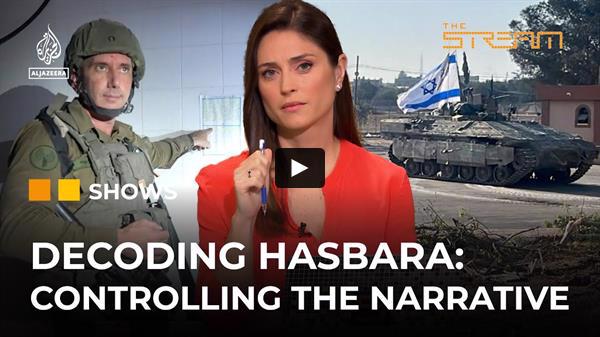
‘Hasbara.’ Does that ring a bell? It’s Hebrew for “explanation”, but it’s also a strategic communication method used to influence perceptions and tilt narratives in favour of Israel. Amid one of our darkest chapters, we’re witnessing a livestreamed “genocide”, bombings of schools and hospitals, targeting of humanitarian workers and journalists, and rampant human rights violations.
Despite these facts, many still question them and align with Israel’s defence. Why? Partly due to a meticulously crafted technique that shapes public opinion and geopolitical outcomes. Today, we’ll delve into Israel’s intricate art of shaping perceptions.
By Anelise Borges, Jennine Khalik, Katie Bogen, and Matt Lieb (The Stream, 7/23/24) |
|
|
Forty-five surgeons, emergency room physicians and nurses who volunteered in several Gaza hospitals over recent months have written to Joe Biden claiming that the true death toll from Israel’s months-long assault is more than 92,000, demanding the US withdraw diplomatic and military support for Israel until there is a ceasefire.
The eight-page letter, delivered on Thursday and addressed to Biden, the first lady, Jill Biden, and the vice-president, Kamala Harris, said the medics saw evidence of widespread violations of laws governing the use of US weapons supplied to Israel, and of international humanitarian law.
By Chris McGreal (The Guardian, 7/25/24) |
|
|---|
|
Mainstream media is often considered corporate-friendly due to its heavy reliance on advertising revenue. When your advertisers include pharmaceutical and food companies, defence contractors and financial institutions, addressing critical issues could be seen as corporate suicide.
As Noam Chomsky put it, the media often serves as a tool for “manufacturing consent,” rather than fostering informed public discourse. He emphasized that certain topics are confined within allowable boundaries set by powerful institutions, limiting the range of acceptable discussion.
By Frank Giustra (Responsible Statecraft, 7/23/24) |
|
|---|
|
Middle Americans and the poor have been leading hard lives for decades because of the nature of the economic and political systems in which we live and work. Those systems prioritize many things, but the well-being of average citizens is not one of them. The American polity and economy are thoroughly skewed in favor of production, profit, and power at the expense of people, place, and planet.
Yes, the Democrats failed to deliver, but even when they had some power, they were quite constrained. The critique of our failed and failing political economy could take forever, but much of it is summed up by Peter Barnes in Capitalism 3.0: “The reason capitalism distorts democracy is simple. Democracy is an open system, and economic power can easily infect it. By contrast, capitalism is a gated system; its bastions aren’t easily accessed by the masses. Capital’s primacy thus isn’t an accident…. It’s what happens when capitalism inhabits democracy.”
By Gus Speth (Essays from the Edge, 7/12/24) |
|
|---|
|
|
|
Since 1980, the global economy has undergone a dramatic transformation, with the globalization of the labor force, the rise of automation, and—above all—the growth of Big Finance, Big Pharma, and Big Tech. The social democratic consensus of the immediate postwar years has given way to a new phase of capitalism that is leaving workers further behind and reshaping the class structure.
The precariat, a mass class defined by unstable labor arrangements, lack of identity, and erosion of rights, is emerging as today’s “dangerous class.” As its demands cannot be met within the current system, the precariat carries transformative potential. To realize that potential, however, the precariat must awaken to its status as a class and fight for a radically changed income distribution that reclaims the commons and guarantees a livable income for all. Without transformative action, a dark political era looms.
By Guy Standing (Great Transition Initiative, October 2018) |
|
|---|
|
Under the privately-owned means of production, workers function as a mechanistic instrument of capital and not as social beings with individual agency. Workers cede control of their lives – and, by extension, their very selves – by not having control over their labour. Labor under capitalism does not allow workers to engage in journeys of self-discovery; it is not a means to attain autonomy. Workers can exist only in the manner that has use to the bosses; they are subservient to wider capitalist system goals and prescribed activities.
By Daniel Newman (Red Pepper, 7/14/23) |
|
|---|
|
Yes, after the Donald Trump shooting, now is a good time to talk about the need for better gun laws. If we’re serious about diminishing the incidence of lone-wolf political violence in the United States, lecturing people to tone down the way they talk about figures like Donald Trump is unlikely to be an effective strategy.
A more fruitful area to focus on is America’s gun laws, which are bizarrely permissive by the standards of other advanced democracies.
Nearly 342 million people live in this country, and we have about 393 million guns. If you want fewer political shootings, and fewer shootings in general, it’s long past time to do something about that.
By Ben Burgis (Jacobin, 7/14/24) |
|
|---|
|
|
|
|---|
|
|
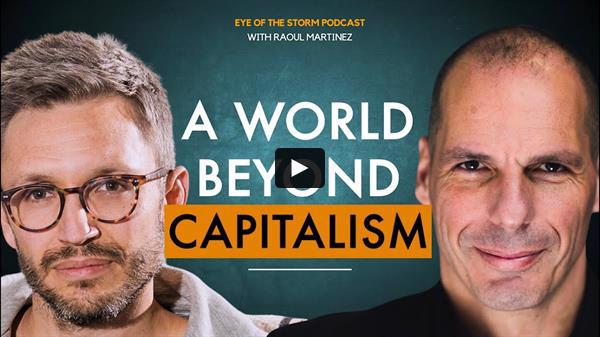
A Vision for the Future
Join Raoul Martinez and Yanis Varoufakis for a series of discussions on power, capitalism, and the crises of civilization, with renowned guests from the world of politics and the arts.
This podcast is released alongside an acclaimed new docuseries: “In The Eye Of The Storm — The Political Odyssey Of Yanis Varoufakis”.
Yanis Varoufakis is an economist, politician, author and the former finance minister of Greece. Raoul Martinez is a philosopher, author, and filmmaker.
In this episode, Yanis and Raoul are joined by Jason Hickel, economic anthropologist, author, and a Fellow of the Royal Society of Arts, to discuss the prospects of bringing about a socially and environmentally just world beyond ecocidal neoliberal capitalism.
|
|
| |
We deceive ourselves if we imagine that capitalists ruminate over moral issues and struggle to find some sort of ethical compromise in which the preservation of the environment and the feeding of humanity can both be accomplished. Capitalism, by nature, kicks ethical constraints aside, just as water runs down hill.
Many activists have argued that the climate movement must broaden its base, form alliances and coalitions, and – this is critical – develop the sort of rhetorical gravitas commensurate with the task of redirecting human fate. If poverty has deep systemic ties to climate catastrophe, does that compel us to expand our collective vision, and to protest all of the hostile societal forces that punish poor people?
[Full story]
By Phil Wilson (CounterPunch, 11/28/23) |
|
|---|
|
In so many places experiencing extreme heat, air conditioning will become nothing short of a protective survival tool, but (all too sadly) it’s also a prodigious generator of — yes, of course! — greenhouse gases. The climate impact of air conditioning and refrigeration, which together already account for more than 10% of global greenhouse gas emissions from all sources, is expected to double in the next 25 years. If that happens, the world’s nations will be thrown even further off track when it comes to fulfilling their pledges to meet UN climate goals.
The question is: Can we somehow work ourselves free of such a dependence on industrial cooling, or have we already passed the point of no return?
By Stan Cox (TomDispatch, 6/13/24) |
|
|---|
|
In recent years, auto manufacturers have phased out many smaller vehicles, citing weak demand, in favour of an ever-growing array of SUVs and light trucks. Not only do they cost more to purchase and fill up, but they are having an outsize effect on global warming. As the International Energy Agency points out, if SUVs were a country, they would be the fifth-biggest emitter of CO2.
David Zipper, a Washington, D.C.-based senior fellow at the MIT Mobility Initiative who has studied the automotive industry for decades, calls it a “prisoner's dilemma” — a situation where consumers who may prefer smaller cars are being pushed toward larger ones. “It plays to this reptilian brain that I think automakers did with SUVs and pickups, to basically say, ʻWouldn’t you rather be … the biggest person on the road?’” Zipper said.
Source: By Andre Mayer and Emily Chung (CBC, 6/24/24) |
|
|---|
|
|
|
A fundamental problem is that capitalism is dependent on consumerism. Household consumption (all the things that people buy for personal use from toothbrushes to automobiles) constitutes 60 to 70 percent of a typical advanced capitalist economy’s gross domestic product; it is because of this dependency that so much money and effort is put into advertising and marketing, creating “needs” we didn’t know we had, and the pervasiveness of “planned obsolescence.”
Consumerism and over-consumption are not “cultural” or the result of personal characteristics — they are a natural consequence of capitalism and built into the system. Problems like global warming and other aspects of the world environmental crisis can only be solved on a global level through democratic control of the economy, not by individual consumer choices or by national governments.
By Pete Dolack (ZNetwork, 5/30/24) |
|
|---|
|
A savvy reporter I once met referred to carbon capture and storage as a “delay and fail” strategy by the fossil fuel industry. The industry has generated a lot of hoopla and elicited substantial public funds to supposedly help make the technology “commercially viable.” The funds are spent on so-called pilot projects which take many, many years to reach their conclusion.
There is no reason to believe that absent huge subsidies, carbon capture and storage will ever be broadly viable. By the time the politicians and public have figured this out, the industry will have been able to burn through another couple decades of fossil fuels with few repercussions. Of course, one of the advantages of spending limited public research funds on boondoggles like this one is that such spending will starve the alternatives to fossil fuels (including conservation and efficiency) these alternatives might otherwise have had access to.
By Kurt Cobb (Resource Insights, 6/16/24) |
|
|---|
|
More than 140 organizations gathered under the slogan: “Enough, let’s put limits on tourism.” Neighborhood associations, social movements, ecologists, and housing activists were among the groups that organized the march.
Organizers say the massive influx of tourists exacerbates social inequality, problems around access to housing, and the environmental crisis. The July 6th demonstration follows similar protests in the Canary Islands and the Balearic Islands.
Source: Catalan News, 7/8/24 |
|
|---|
|
|
|
|---|
|
| |
|
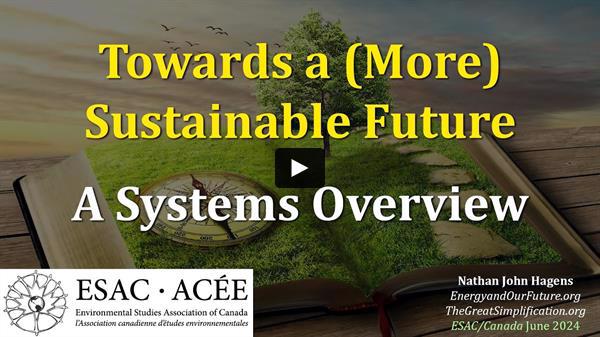
By Nathan Hagens (The Institute for the Study of Energy and Our Future)
A keynote presentation to the Congress of the Environmental Studies Association of Canada
There are over 200 million college students in the world. What are we teaching them, and what curriculum will be more appropriate for the world we are heading into? It is my hope that many professors, post-docs, and university affiliates experience this synthesis and that it contributes to expanding the conversations, research, curricula, and actions of the good people at universities around Canada and the world. |
|
|
|
|
.
Your donations to this cause are tax-deductible
under section 501(c)(3) of the IRS code
Image credit: Freepik |
|
|---|
|
|
|
Essential Critical Questions (ECQ) are those that stimulate deep reflective thinking and critical inquiry. They can help focus our attention on issues vital for just and peaceful sustainability transitions, reveal our cognitive blindspots, frame our dispositions to settle controversies fairly, “straighten out” our reasoning when dealing with situations of uncertainty, and trigger generation of big ideas and creative approaches for tackling complex, intractable, and truly wicked problems. |
|
|---|
|
We just started generating OCI’s list of essential critical questions, and we invite intellectual input from members of Hawai‘i civil society, as well as fellow knowledge workers laboring in various institutional domains—scientists, physicans, journalists, librarians, educators, and other members of island intelligentsia. Please make your critical thought contribution to ideas@hawaii.edu.
The following five questions were selected for this issue of
Metascope: |
|
|---|
|
“Do the world’s problems have an underlying/overarching/inherent cause that we might do something about?
Do the main ways that those with political and economic power currently try to solve problems (policy, regulation, trade, technology, economic growth) tend to make those problems worse?
Is there a reason to think our historical moment is qualitatively distinct from other historical moments in a way that calls for a fundamental shift in our relationship to reality?
Should we take care to ensure that the terminology we choose to distill the essence of our global situation is as accurate and edifying as it possibly can be?
Is there something about the very idea of crisis that militates against the kinds of transformation we now need?”
|
|
Note that the questions we would like you to reflect on are in quotes; they were borrowed from an essay by Jonathan Rowson, a Scottish chess grandmaster and philosopher. We will reference this essay in one of the upcoming issues of
Metascope and provide additional context for its inclusion. |
|
|---|
|
|
There is an audacity in focusing on the possible in an age of major personal and societal impossibilities. At the time of writing (March 2022), the world is still struggling with the COVID-19 pandemic and its aftermath, a horrific war is being waged by Russia in Ukraine, and the climate emergency is only intensifying.
From the interdictions of quarantine to the forced migration of millions, from post-truth politics to the consequences of extreme weather phenomena, our reality reminds us that the positive futures imagined for the 21st century are in question. Or, at least, that we paradoxically live, at once, in the best and the worst of times (Wijnberg, 2019). And yet, as we go against such formidable constraints, we can still rely on the quintessentially human capacity to hope, to imagine and to envision new possibilities for environmental action, justice and peace. The possible re-emerges as an organising category in our lives and our thinking not despite but because of living through the seemingly impossible and unimaginable.
.
|
|
|---|
|
|
|
Keywords and meta-markers: the nature of the possible; generative accounts of the world; societal transformations; interplay between the actual and possible; human condition; shift from being to becoming; collective imagination; institutional innovation; collective cognitive development; means and ends of transdisciplinarity; reality of thinking |
|
Source:
Glăveanu, V. P. (2023).
Possibility Studies: A Manifesto. Possibility Studies & Society, 1(1–2), 3–8.
https://doi.org/10.1177/27538699221127580
..
.
.
.
. |
|
|---|
|
|
|
|---|
|
| |
The failure to effectively confront major challenges facing humanity, most importantly, the global ecological crisis, it is argued, is due to the failure of those analysing the root causes of these challenges to engage with and invoke political philosophy to find a way out, and concomitantly, the failure of ethical and political philosophers to effectively engage with the deep assumptions, power structures and dynamics actually operative in the current world-order. It is claimed that this is due to a tacit acceptance of a cultural dualism manifest in the opposition between the sciences and the humanities, with the humanities having been marginalized by the sciences.
To overcome this dualism and marginalization of the humanities, and to defend communitarian ethical and political philosophy in a way that both challenges mainstream thinking and engages with the world as it is, with the potential to inspire and orient people for effective action, it is shown how communitarian ethical and political philosophy can be defended and developed through ecology incorporating the notion of ecopoiesis. It is shown how this can serve to create an effective counter-hegemonic culture, integrated as a dialogic grand narrative, uniting and orienting people to create a multi-polar world-order as an ecological civilization.
_
|
|
|---|
|
|
|
Keywords and meta-markers: ecopoiesis; ecological civilization; political philosophy; communitarianism; ecology; hegemonic culture; neoliberalism |
|
Source:
Gare, A. (2024).
Rethinking Political Philosophy through Ecology and Ecopoiesis. Eco-Human Theory and Practice, 5(1), 8–24.
https://doi.org/10.24412/2713-184x-2024-1-8-24
....
.
.
.
.
.
.
.
.
.
.
.
.
|
|
|---|
|
|
|
|---|
|
| |
It has been suggested that philosophers should adopt a methodology largely inspired by mathematics and that the “mathematical” virtues of rigor, clarity, and precision are also fundamental philosophical virtues. In reply, this paper argues that some excellent philosophy lacks these virtues and that too much emphasis on the mathematical virtues excludes potentially valuable forms of philosophical discourse and makes the profession less diverse than it should be. Unduly restrictive conceptions of philosophical argumentation should be avoided.
On a contributory conception, philosophy should try to make a positive contribution to human emancipation where possible. The paper argues that it is possible and desirable for epistemology to contribute in this way and that the mathematical virtues are less significant in this context than the emancipatory virtues of what one might call “liberation philosophy.” These include irony, reflectiveness, imagination, contrarianism, and worldliness.
.
|
|
|---|
|
|
|
Keywords and meta-markers: human emancipation; liberation philosophy; emancipatory virtues; human flourishing; character development; belief production and retention; structural explanations of ignorance; oppressive intellectual ideologies; group-based miscognition; gaslighting; hermeneutic marginalization |
|
Source:
Cassam, Q. (2023).
Some Vices of Vice Epistemology.
Metaphilosophy, 54(2–3), 195–207.
https://doi.org/10.1111/meta.12624
.
.
.
.
.
.
.
.
.
.
. |
|
|---|
|
|
|
|---|
|
| |
We set out a case for practice theory as a way to better understand and advance commoning, responding to calls for more communologies, that is, methodologies for the commons. Within the framing offered by practice theory, we argue for two potentially complementary ways of knowing: comparison and interpretation. These approaches and combinations of them are under-used in the field but are growing as additional ways of knowing that could inform both theory-building and practice.
The aim is to add to the knowledge base for commons movements, as part of the mycelium for the commonsverse. Such a claim is not just a methodological or epistemological argument, but an argument about how to advance the commoning movement by rethinking how we try to understand and study it. Particularly, we focus on trying to bridge the gap between the utopian aspirations of commons movements and the realities of making such changes to existing ways of organising social, political and economic life. Worked examples by the authors are offered to illustrate the value of comparison and interpretation. One is from a ‘comparative configurational analysis’ of participatory budgeting, suggesting that some of the widely argued combinations of success factors for those initiatives are not borne out by the evidence. A second worked example showcases an innovative ‘autoactionography’ method, which helps to reveal the lived experiences of developing new practices of commoning, and how commoners in one place are creating strategies towards an ontological shift against dominant modes of social organisation.
It concludes with a call for methodologies that foreground an understanding of the world as a recursive process of dynamic interplays between material resources, various forms of human agency and know-how, and ascribed meanings and aspirations.
.
|
|
|---|
|
|
|
Keywords and meta-markers: commons; practice theory; comparison; interpretation; participatory budgeting; ethnography; commonsverse; mycelium; methodology |
|
Source:
Richardson, L., et al.(2024).
Knowledge for the Commons: What is Needed Now? International Journal of the Commons, 18(1), 218–230.
https://doi.org/10.5334/ijc.1250
..
.
.
.
.
.
.
.
.
.
.
.
.
.
.
.
.
.
.
.
.
.
.
.
.
|
|
|---|
|
|
|
|---|
|
| |
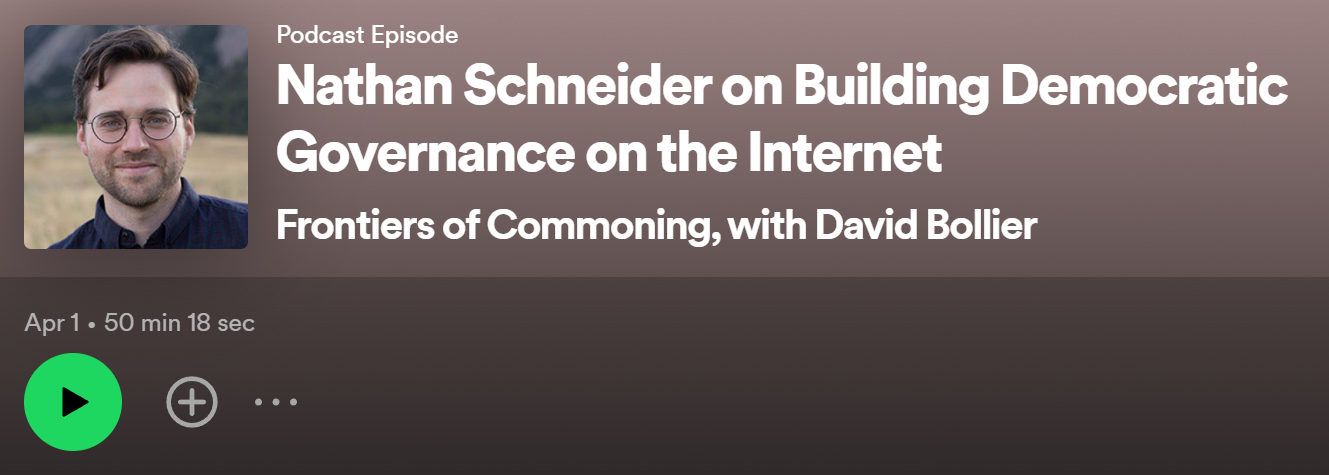
To counter the “implicit feudalism” that is the norm on the Internet, activist-scholar Nathan Schneider explains the potential of democratic governance in online life and its importance to “real world” democracy. A professor of media studies at the University of Colorado Boulder, Schneider argues that “online spaces could be sites of creative, radical and democratic renaissance.” But this will require progressive activists to heed the lessons of various social and decolonial movements throughout history, and to find the resolve to use the technologies in creative ways.
|
|
|---|
|
|
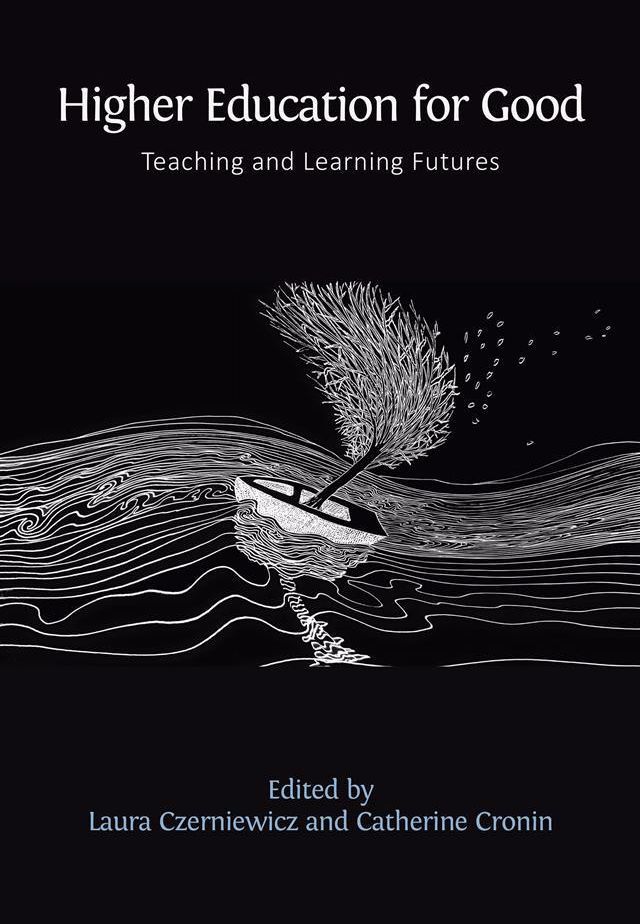
OPEN-ACCESS BOOK: HIGHER EDUCATION FOR GOOD |
|
|
|
|
After decades of turbulence and acute crises in recent years, how can we build a better future for higher education?
Thoughtfully edited by Laura Czerniewicz and Catherine Cronin, this rich and diverse collection by academics and professionals from across 17 countries and many disciplines offers a variety of answers to this question. It addresses the need to set new values for universities, trapped today in narratives dominated by financial incentives and performance indicators, and examines those “wicked” problems which need multiple solutions, resolutions, experiments, and imaginaries.
|
|
|---|
|
|
|
This mix of new and well-established voices provides hopeful new ways of thinking about Higher Education across a range of contexts, and how to concretise initiatives to deal with local and global challenges. In an unusual and refreshing way, the contributors provide insights about resilience tactics and collective actions across different levels of higher education using an array of styles and formats including essays, poetry, and speculative fiction.
With its interdisciplinary appeal, this book presents itself as a provocative and inspiring resource for universities, students, and scholars. Higher Education for Good courageously offers critique, hope, and purpose for the practice and the trajectory of Higher Education.
|
|
This publication and the new
Consilience Learning Series are co-produced by IMUA Labs* and the People’s Knowledge Institute (PKI), a critical social learning system and an experimental vehicle for integral, post-formal education, and transformational community research.
The central goal of our publications, knowledge-sharing streams and collaborative learning exercises is to cultivate civic intelligence, systemic literacy, and cognitive competences essential for living in a complex, dynamic world, and to elevate the community’s possession of truth, knowledge, and rational beliefs that support the ecological way of life. We iteratively develop and test innovative institutional-epistemology and knowledge-management know-how to improve the civic community’s learning capacity and self-awareness and to facilitate deeper intersectoral collaboration to respond to the grand challenges of green transformation.
As a collective intelligence initiative, we welcome a diversity of ideas and epistemic pluralism. Thus, the arguments expressed in our knowledge syntheses, bulletins, and event announcements do not necessarily reflect the views of IMUA Labs, PKI or the Hawai‘i Institute for Socio-Ecological Transformation (HISET). Should you spot a data error, a missing critical topic or issue, or an instance of faulty reasoning in our transdisciplinary publications, please submit your feedback to our knowledge gardeners and science communication specialists at
imualabs@hawaii.edu. |
|
|---|
|
*IMUA Labs @UH is a short name of the IMUA Scholarly Society for Epistemic Innovation, Integral Studies, and Transformational Research |
|
|---|
|
|
|